
Navigating the Green Hydrogen Frontier: Advanced Leak Detection and Valve Stress Testing
Using GUBELOG-01 as datalogger
4/19/20263 min read
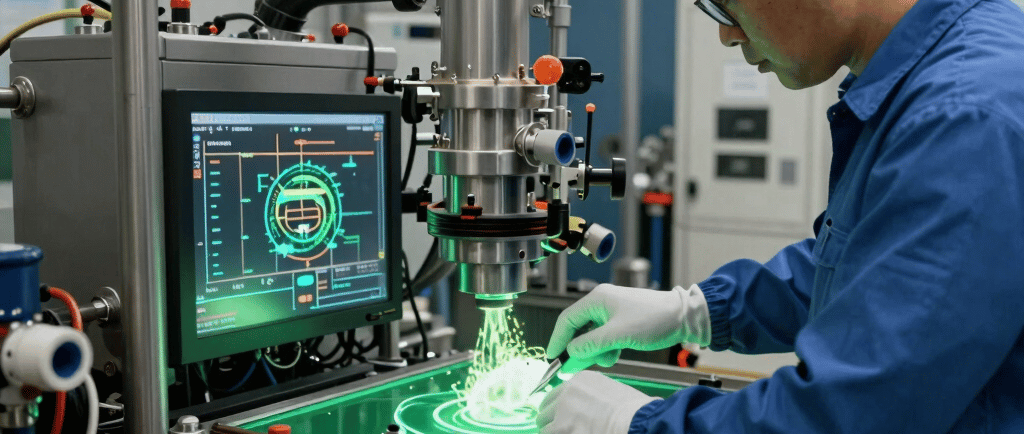
Navigating the Green Hydrogen Frontier: Advanced Leak Detection and Valve Stress Testing with GUBELOG-01
The transition to a sustainable energy ecosystem relies heavily on the viability of green hydrogen. As industries scale up production, storage, and distribution, the engineering challenges associated with handling this unique gas become increasingly prominent. Among the most critical components in any hydrogen infrastructure are the valves that regulate its flow and the systems designed to detect leaks.
At Gubellini Electronics, we understand that standard industrial monitoring falls short when dealing with the realities of hydrogen. This article explores the unique complexities of hydrogen leak detection and valve stress testing, and how our proprietary GUBELOG-01 system is engineered to solve them.
The Complexity of Hydrogen Containment
Green hydrogen presents a unique set of physical and chemical challenges that push standard industrial components to their limits:
The Microscopic Threat: Hydrogen is the smallest molecule in the universe. This extreme smallness allows it to permeate materials and escape through microscopic imperfections in seals and valves that would easily contain other gases like methane or oxygen.
High-Pressure Environments: To be stored and transported efficiently, hydrogen is often compressed to extreme pressures (frequently between 350 and 700 bar). This places immense, continuous mechanical stress on valve bodies, actuators, and sealing mechanisms.
Thermal Dynamics and Embrittlement: Rapid depressurization of hydrogen causes sudden temperature changes. Furthermore, prolonged exposure to high-pressure hydrogen can cause "hydrogen embrittlement" in metals, degrading the structural integrity of valves over time.
Dynamic Stress Variables: Valves in hydrogen applications do not just sit statically; they undergo rapid cycling, handling extreme pressure differentials that create shockwaves and intense mechanical wear.
Traditional testing and monitoring setups often struggle to capture the ultra-fast, synchronized data required to detect micro-leaks or to evaluate the true dynamic stress acting on these valves during operation.
The GUBELOG-01 Solution: Precision Meets Reliability
To address the demanding requirements of green hydrogen infrastructure, Gubellini Electronics developed the GUBELOG-01. This advanced data acquisition and processing system is designed specifically to capture, analyze, and interpret the complex variables involved in valve stress testing and leak detection.
Rather than relying on disjointed hardware and generic software, the GUBELOG-01 provides an integrated, proprietary architecture focused on high-speed synchronization and real-time intelligence.
Seamless Acquisition with CAN-Click Sensors
At the heart of the GUBELOG-01’s hardware ecosystem are our exclusive CAN-Click sensors. These modular units represent a breakthrough in how physical data is gathered from the testing environment.
Modular and Scalable: Whether a test bench requires monitoring pressure, temperature, or mechanical strain on a valve body, the CAN-Click sensors provide a unified, plug-and-play interface.
Robust Communication: Utilizing a highly resilient, noise-immune industrial communication network, the CAN-Click sensors ensure that data from multiple points on a valve or pipeline is transmitted back to the main GUBELOG-01 unit with absolute synchronization.
Decentralized Intelligence: By handling the immediate analog-to-digital conversion directly at the sensor level, our CAN-Click technology eliminates the signal degradation that typically plagues complex test benches, ensuring that even the most minute pressure drops—indicative of a micro-leak—are captured instantly.
Real-Time Analysis via the Built-In Mathematical Engine
Collecting data is only half the challenge; interpreting it dynamically is where the true value lies. Valve stress testing requires complex calculations to determine flow coefficients, pressure decay rates, and mechanical fatigue limits based on live data streams.
The GUBELOG-01 achieves this through its powerful, integrated mathematical engine.
Dynamic Formula Evaluation: Instead of exporting data for post-processing, the GUBELOG-01 allows engineers to input custom mathematical formulas directly into the system. The mathematical engine evaluates these expressions in real-time.
Instantaneous Leak Detection: By continuously computing the relationship between pressure, temperature, and volume, the system can immediately identify the mathematical signature of a hydrogen leak, long before traditional threshold alarms would trigger.
Automated Stress Profiling: During valve cycling tests, the mathematical engine calculates the cumulative fatigue and stress metrics on the fly. This provides immediate, actionable insights into the valve's lifecycle and safety margins without the need for cumbersome external processing tools.
Redefining Safety and Efficiency
In the green hydrogen sector, there is zero margin for error. Undetected leaks pose severe safety risks, and premature valve failures can lead to catastrophic facility downtime.
The GUBELOG-01, powered by our proprietary CAN-Click sensor network and advanced mathematical engine, offers a comprehensive solution. It abstracts the complexity of data acquisition and live-calculation, providing engineers with clear, precise, and immediate insights into valve performance and system integrity.
By utilizing Gubellini Electronics' dedicated technology, operators can confidently stress-test critical components, ensure uncompromising leak detection, and push the boundaries of green hydrogen infrastructure with complete peace of mind.
Contact
PHONE
info@gubellinielectronics.com
+39 3479200208
© 2025. All rights reserved.
GUBELLINI s.a.s. di Diego Gubellini & C.
Via Euridia Bergianti 10B 40059 Medicina BO Italy
VAT: IT03466001207

+39 3801978288
POLICY
APPLICATIONS
Refund policy
Terms and conditions
COMPANY