Health Management in Aquaculture and Hydroponic Environments
Intelligent Monitoring and Health Management in Aquaculture and Hydroponic Environments: The Gubellini Ecosystem GUBELOG-01
4/12/20268 min read
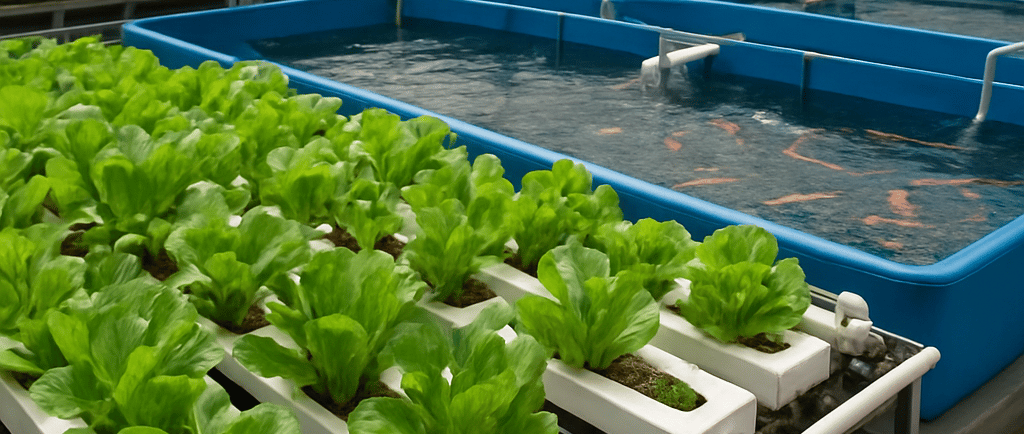
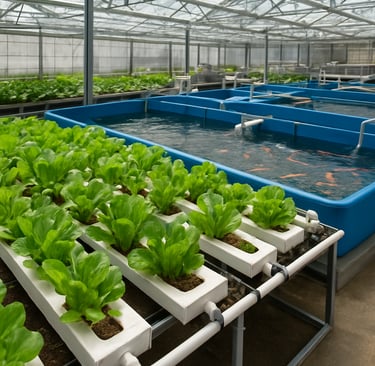
Intelligent Monitoring and Health Management in Aquaculture and Hydroponic Environments: The Gubellini Ecosystem GUBELOG-01
The aquaculture and industrial hydroponics sector is experiencing an unprecedented transformation, where the difference between commercial success and biological failure lies in the ability to interpret the complex chemistry of water in real time. Managing artificial ecosystems, whether intensive fish farming tanks or soil-less cultivation systems, requires overcoming analytical challenges that traditional monitoring methods are no longer able to address with the necessary timeliness. Against this backdrop, Gubellini Electronics has developed an integrated architecture based on the GUBELOG-01 datalogger and exclusive CAN-Click sensor technology , designed to transform the measurement of vital parameters into a proactive biomass defense strategy.
Complexity and Dynamics of the Aquatic Sector: The Challenge of Precision
Water is not a simple medium, but a fluid chemical organism in which every change in a single parameter triggers chain reactions on microscopic and macroscopic scales. Understanding these complexities is essential for anyone working in precision aquaculture or high-tech hydroponics.
The Bio -Filter: The Silent Biological Infrastructure
In any recirculating system (RAS) or advanced hydroponic system, the biofilter is the beating heart of water treatment. It is not a simple mechanical component, but a living ecosystem composed of nitrifying bacteria that perform the vital task of converting toxic metabolic byproducts into inert substances or nutrients.
The health of a biofilter is precarious and depends on a meticulous balance. Nitrifying bacteria, primarily of the Nitrosomonas and Nitrobacter genera , require constant levels of dissolved oxygen and an extremely specific pH range to operate at peak efficiency. A sudden drop in oxygen or excessive acidification of the water not only halts purification but can cause the bacterial colony to die, leading to a catastrophic accumulation of ammonia in the system.
The Chemistry of Ammonia and the Toxicity Paradox
One of the most complex problems in aquaculture is the distinction between total ammonia, ionized ammonium ($NH4^+$), and non-ionized ammonia ($NH3$). While ammonium is relatively harmless to fish, non-ionized ammonia is a potent neurotoxin capable of crossing cell membranes and causing mass mortality even at very low concentrations.
The complexity lies in the fact that the percentage of toxic $NH_3$ is not fixed, but varies dramatically as a function of the water's pH and temperature. In a system with inconsistent monitoring, an operator might detect a seemingly safe level of total ammonia, unaware that a temperature rise or pH spike has transformed that same amount into a lethal poison.
Dissolved Oxygen: The Most Volatile Parameter
Dissolved oxygen (DO) is the most critical variable for immediate survival in aquaculture systems. Its dynamics are influenced by a multitude of factors: temperature, salinity, atmospheric pressure, and biomass density. Oxygen dissolves extremely poorly in water and is rapidly consumed not only by fish, but also by organic decomposition processes and the activity of biofilters .
In a high-density environment, a faulty air pump can reduce oxygen to critical levels in less than thirty minutes. Furthermore, during the night, in many aquaponic or hydroponic systems, plants and algae cease photosynthesis (which produces oxygen) and begin cellular respiration (which consumes it), creating dangerous minimum oxygen levels that can escape manual daytime monitoring.
Electrical Conductivity (EC) and Hydroponic Nutrition
In hydroponics, electrical conductivity (EC) is the "compass" that guides plant nutrition. It measures the solution's ability to conduct electricity, a value directly proportional to the amount of dissolved mineral salts. Managing EC is a constant balancing act:
EC level ( mS /cm)
Plant Condition
Associated Risks
< 0.8
Nutritional Deficiency
Slow growth, low biomass
1.2 – 2.4
Optimal Range
Balanced absorption, radical health
> 3.0
Osmotic Stress
Leaf burns, root dehydration
An unstable EC leads to fluctuations in cell turgor and can induce the "lockout" phenomenon, where the plant, even though surrounded by nutrients, is unable to absorb them due to the electrochemical imbalance.
Technological Limitations of Conventional Monitoring Systems
Many of the problems encountered in plants stem from the use of inadequate or poorly integrated instrumentation, which generates noisy or difficult-to-interpret data.
The Ground Loop Problem
In aquatic installations, ground loops are the main cause of erroneous readings from pH and EC sensors. Because water is a conductor, when multiple probes powered by the same source are immersed in the same tank, parasitic electrical paths can be created. These microcurrents interfere with the electrodes' weak millivolt signals, making measurements unstable or inducing systematic errors that no calibration can correct.
The Lack of Predictive Analytics
Most data loggers on the market simply record numerical values. However, knowing the current oxygen or ammonia level is often insufficient if you can't predict trends over the next few hours. Without tools capable of correlating data (e.g., how pH affects toxicity), the operator is forced to perform complex manual calculations that are prone to human error.
Robustness in Hostile Environments
Salt humidity, pump vibrations, and extreme temperature variations rapidly degrade unprotected electronics. Many inexpensive sensor boards suffer from premature contact oxidation and thermal drift, requiring weekly calibrations, increasing maintenance costs and reducing system reliability.
Sensor Technology : Gubellini Electronics' Approach
Gubellini Electronics responded to these critical issues by developing the GUBELOG-01, a system that is not just a data recorder, but an intelligent processing unit capable of managing distributed sensor networks.
Exclusive Integration and Distributed Architecture
The heart of the Gubellini solution lies in the interface between the central data logger and the CAN-Click sensor boards . Each chemical parameter is acquired by a dedicated CAN-Click sensor board , which acts as a peripheral intelligent node. This architecture offers immense advantages:
Noise Immunity: Communication between the sensors and the GUBELOG-01 occurs digitally via a robust data bus, which eliminates the signal loss typical of long analog cables.
Integrated Galvanic Isolation: Gubellini Electronics' CAN-Click sensor boards feature proprietary electrical isolation, which physically interrupts ground loops. This allows for an infinite number of probes to be immersed in the same tank without any mutual interference, ensuring unparalleled metrological stability.
Edge Computing: Each CAN-Click sensor performs signal pre -processing , applying digital filters to eliminate "noise" caused by air bubbles or turbulent water flows, sending clean, engineered data to the datalogger .
The GUBELOG-01: Features and Operational Utility
The GUBELOG-01 is designed to be the control center for complex systems. With the ability to acquire up to 38 inputs simultaneously, it can manage the entire telemetry of a hydroponic greenhouse or large RAS system.
Flexible Inputs: In addition to the network for CAN-Click sensors , the device features industrial analog inputs (0-5V and 4-20mA) for level and pressure sensors, and digital inputs for flow meters.
IPX7 Certified: The PA12 Nylon casing and JAE MX23A automotive grade connector ensure the system can operate immersed in steam and protected from splashing water, typical of water-filled engine rooms.
Memory and Data Security: Recording takes place on micro-SD memory in RAW format (raw writing), preventing data loss in the event of sudden shutdowns or file corruption, typical of systems based on traditional operating systems.
The Mathematical Engine: The Science of Prevention
The most significant innovation introduced by Gubellini Electronics is the integration of an advanced "math engine" within the system. This tool allows for the simple reading of physical sensors to generate "virtual sensors" based on real chemical and physical models.
Real-Time Calculation of Ammonia Toxicity
Thanks to the mathematical engine, the GUBELOG-01 not only communicates the total ammonia level, but instantly calculates the toxic fraction ($NH_3$) by cross-referencing the pH and temperature data from the CAN-Click sensors . The formula implemented in the system is as follows:
$$\ text{ NH}_3 \text{ Toxic} = \ cdot \ left ( 1 + 10^{ (0.09018 + \frac{2729.92}{T + 273.15} - pH) } \ right )^{-1}$$
This computing power allows the system to trigger critical alarms even when individual parameters appear normal, but their chemical combination has become lethal for the farmed species.
Optimizing Transpiration: The VPD Index
In hydroponics, the mathematical engine is used to calculate Vapor Pressure Deficit (VPD). This value indicates the difference between the vapor pressure inside the leaf and that of the surrounding air, precisely defining how much the plant is transpiring. By adjusting humidity and temperature based on the VPD calculated by the GUBELOG-01, it is possible to prevent fungal diseases caused by excessive humidity or stunted growth caused by excessively dry air, while also optimizing nutrient uptake measured by EC sensors.
AI Analyst: The Always-On Data Engineer
DataStudio management software takes monitoring to the next level with the integration of the AI Analyst. This multi-agent artificial intelligence system acts as an expert technical consultant, analyzing the datasets recorded by the GUBELOG-01.
Automatic Diagnosis and Cause Research
The AI Analyst doesn't just generate graphs, it can also answer complex operational questions. An operator might ask, "Why has oxygen consumption increased by 20% over the last three days?" The AI will analyze the data, verify whether there is a correlation with increased water temperature or feeding cycles, and produce a detailed technical report in PDF format with possible solutions.
Data Cleaning and Intelligent Filtering
In aquaculture environments, sensors can be subject to temporary "noise," such as air bubbles passing over the oxygen probe or debris temporarily obscuring an optical sensor. The AI Analyst is trained to recognize these anomalous spikes and "clean" the data, allowing the actual trend of the biological parameter to be visualized without the distortions caused by the physical environment.
Remote Management with GUBECloud : The System in Your Pocket
Telemetry is the final step in the Gubellini revolution. Using the optional GP-DL-WF01 Wi-Fi module, the GUBELOG-01 connects to the GUBECloud platform , ensuring complete control wherever you are.
Instant Alarms and Notifications
The system autonomously manages up to four hardware alarms that can be configured to any parameter or calculation in the mathematical engine. When an anomaly occurs (e.g., excessive EC or oxygen below the safety threshold), the cloud immediately sends push notifications and emails to managers' smartphones. This dramatically reduces response times, a critical factor when working with living species.
Custom Dashboards and Historical Analysis
Through a web console and a dedicated mobile app, users can view real-time data organized into intuitive dashboards. They can compare performance across multiple plants located in different geographical areas, export data in CSV format for quality certification, or analyze historical data from recent years to optimize growth protocols.
Cloud Features
Utilities for Aquaculture
Hydroponics Utilities
Push Alerts
Prevention of fish asphyxiation
Prevention of irrigation pump blockages
Automatic Reports
Bio -filter efficiency monitoring
Tracking nutrient consumption
Geolocation
Offshore cage fleet management
Monitoring distributed greenhouses
Operational Counters
Predictive maintenance of oxygenators
PAR lamp replacement programming
Connectivity and Infrastructure: The Value of the CAN Network
Gubellini Electronics' choice to use the CAN standard for communication between the data logger and the CAN-Click sensors is no coincidence. This protocol, designed for maximum reliability in the automotive sector, is perfect for industrial and agricultural environments.
System Scalability
The CAN bus allows multiple sensor boards to be connected in series on a single four-wire cable (two for power and two for data). This greatly simplifies system wiring: it's no longer necessary to run dozens of individual cables to the control room; a single digital "backbone" running across the various tanks or cultivation rows is sufficient.
Signal Integrity and Redundancy
Thanks to differential transmission, the CAN network is virtually immune to electrical disturbances caused by starting large motors or inverters. Furthermore, the GUBELOG-01 features a CAN-BRIDGE function, which allows data acquired from analog sensors to be retransmitted directly onto the digital network, facilitating integration with existing automation systems without the need for additional hardware.
Driven Future
The integration of biology and electronics represented by Gubellini Electronics solutions paves the way for plant management that is no longer based on intuition, but on the certainty of scientific data.
Waste Reduction and ROI
Using GUBELOG-01 allows you to optimize fertilizer use in hydroponics, reducing waste and the environmental impact of water runoff. In aquaculture, preventing a single mass mortality event thanks to GUBECloud alarms can pay for the entire investment in the monitoring system in just a few minutes.
Research and Development Support
The system's ability to record high-frequency data and analyze it using AI allows companies to develop proprietary growth "recipes," identifying the exact oxygen, pH, and EC conditions that maximize final product quality.
Conclusions: The Exclusivity of the Gubellini Electronics Solution
In a crowded market of fragmented solutions and consumer technologies borrowed from industry, Gubellini Electronics stands out for having created a cohesive, robust, and profoundly intelligent ecosystem. The GUBELOG-01, combined with the isolated precision of CAN-Click sensors , is not just a measurement instrument, but a life insurance policy for your biological investment.
The combination of the robustness of automotive-grade hardware, the power of the mathematical engine, and the diagnostic insight of the AI Analyst transforms the chemical complexity of water into a competitive advantage. Managing the health of the biofilter , monitoring critical oxygen levels, and precisely balancing the EC are no longer insurmountable challenges, but transparent and automated processes under the constant supervision of Gubellini technologies. The future of aquaculture and hydroponics is written in the data, and with GUBELOG-01, that same data becomes the guarantee of long-lasting and sustainable success.
Contact
PHONE
info@gubellinielectronics.com
+39 3479200208
© 2025. All rights reserved.
GUBELLINI s.a.s. di Diego Gubellini & C.
Via Euridia Bergianti 10B 40059 Medicina BO Italy
VAT: IT03466001207

+39 3801978288
POLICY
APPLICATIONS
Refund policy
Terms and conditions
COMPANY